
Solution
Solution
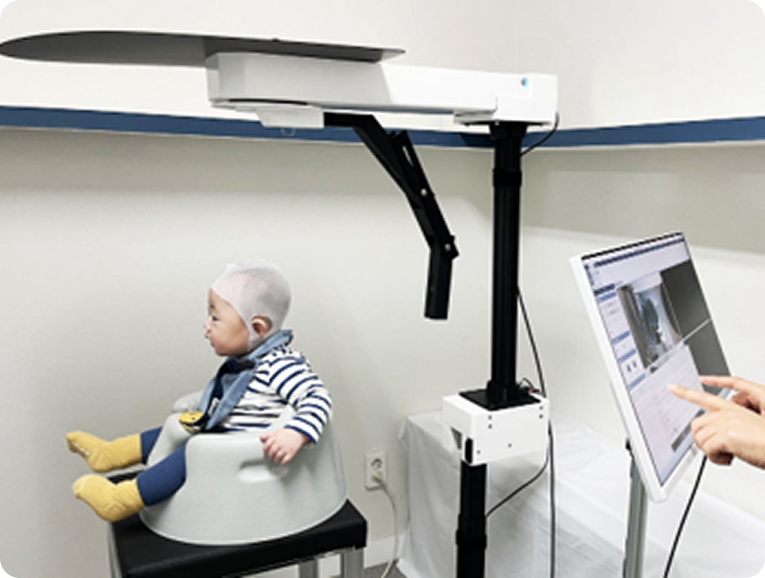
3D Scanner — MS320H
The MS320H scanner is a proprietary scanner developed exclusively for the AceBand and is optimized for scanning
a baby's head.
Specifications
- Scanning Method Infrared (IR) structured-light 3D scanning
- Camera Dual 3D cameras with automatic 360° rotation
- Accuracy High-precision scanning with an accuracy of 0.5 mm or less
- Scanning Time Within 6 seconds, considering the baby’s attention span and ease of use
- Scanning Software Simple mesh editing and scan file storage
- Option Remote operation using a foot-switch device
3D Software - AceBand3D
3D Analysis
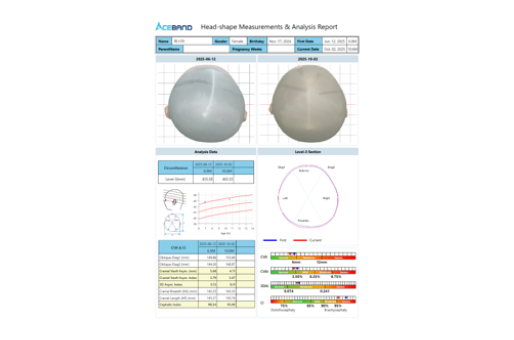
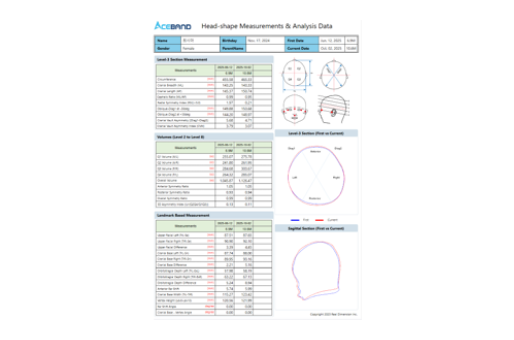
- 3D Head Shape Scanning & Measurement: High-precision 3D digital scanning and geometry analysis.
- CVAI & CI Diagnostic Reporting: Comprehensive measurement reporting, including Cranial Vault Asymmetry Index (CVAI) and Cranial Index (CI).
- Cranial Growth Data Comparison: Comparative data tracking to evaluate progress and head growth over time.
3D Rectification
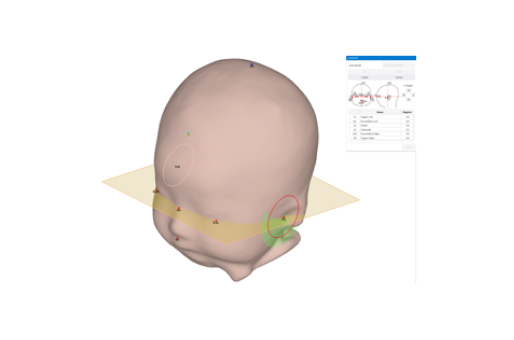
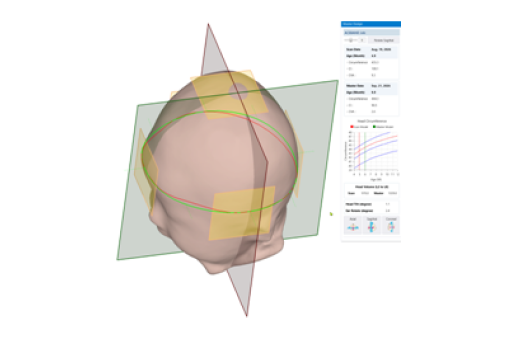
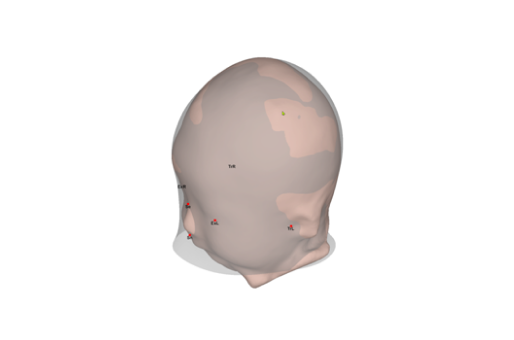
- Multi-Stage 3D Model Generation: Creation of step-by-step 3D corrective models tailored to treatment progression.
- AI-Driven Recommendation Engine: Automated generation of optimal corrective 3D models using AI algorithms.
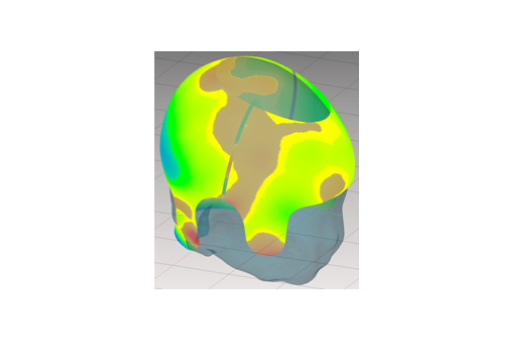
- Volumetric Growth Analysis: Advanced analytics to map and quantify growth-restraint (hold) and growth-guidance (expansion) spaces within the corrective model.
3D Design
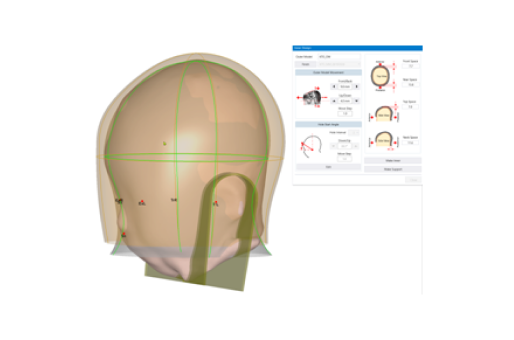
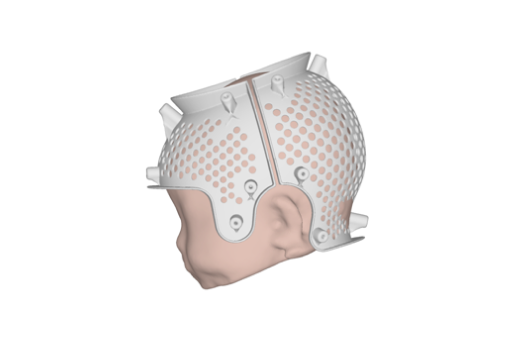
- Automated Dual-Shell Generation: Automatic creation of 3D models for both outer protective and inner corrective shells.
- Custom Shell Calibration: Flexible selection of outer shell sizing, precise ear positioning, and real-time inner-outer clearance adjustment.
- Automated Support Structure Generation: Automatic generation of optimized support models tailored for direct 3D printing.
3D Printing & Fabrication
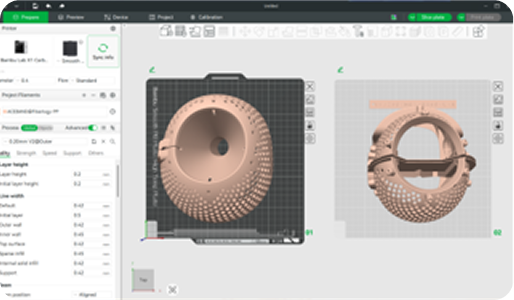
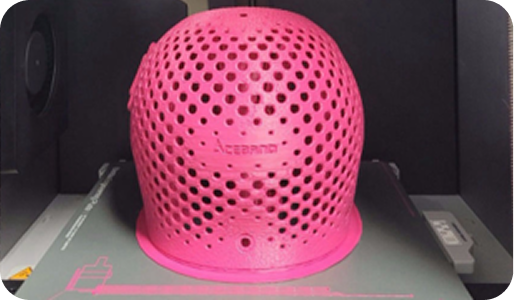
- Optimized Parameter Application: Slicing execution with tailored print parameters independently optimized for both outer and inner shells.
- Direct File Transfer: Direct transmission of sliced toolpath files (G-code) to 3D printers.
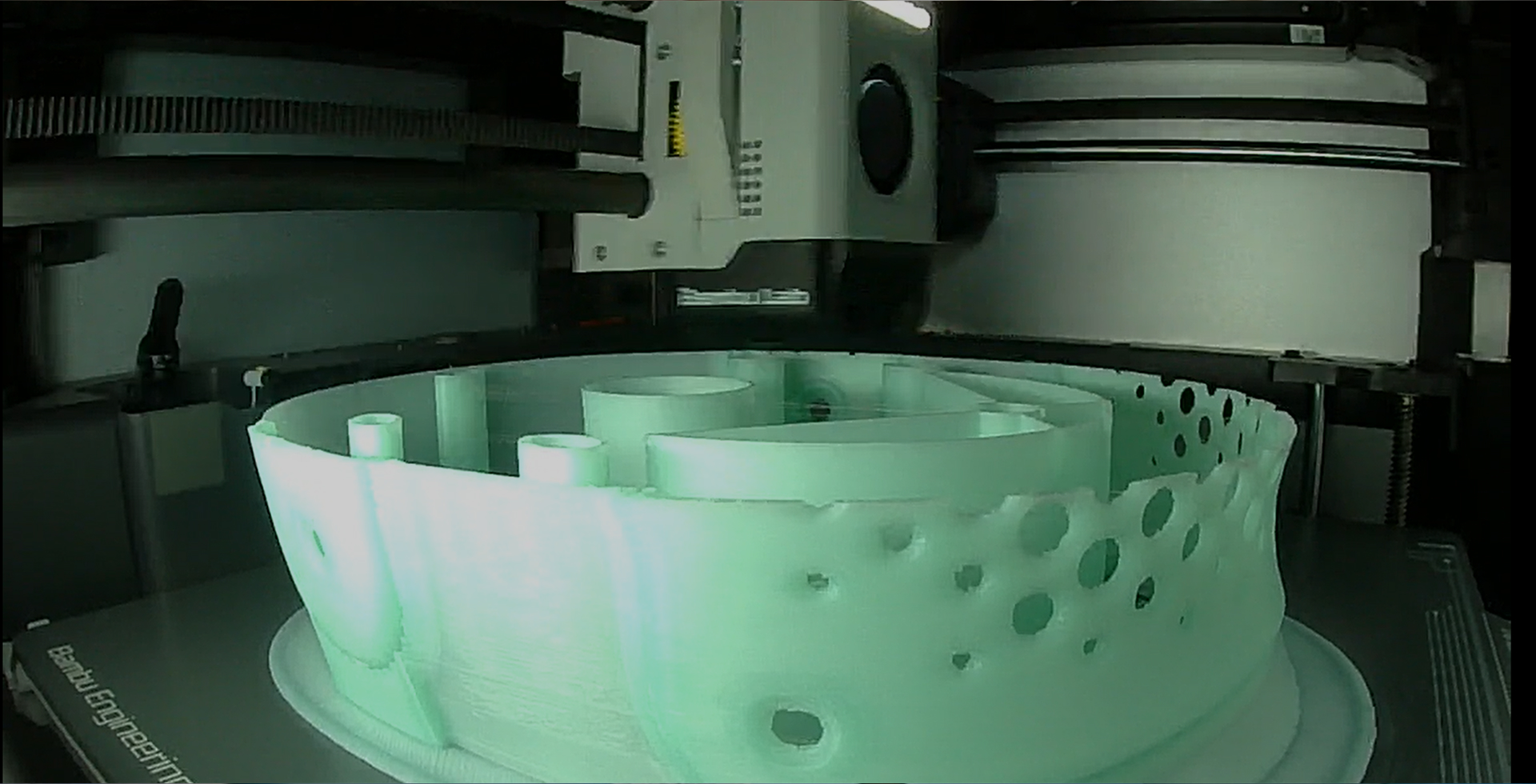
- FDM 3D Printer: High-precision additive manufacturing via FDM 3D printing technology.
- PP Filament Usage: Crafted using durable, flexible Polypropylene (PP) filament.
- Adhesive Bed Setup: Surface adhesive applied prior to printing for strong bed plate adhesion.
- Support Removal & Finishing: Clean removal of 3D print supports and manual post-processing.
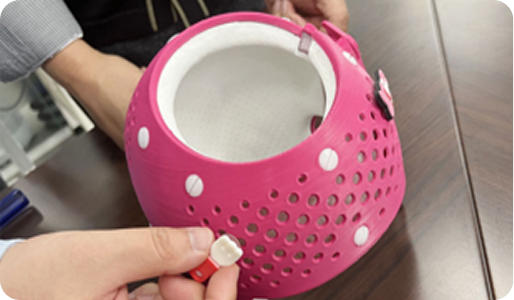
- Foam Lining Attachment: Fitting the internal cushioning foam for baby comfort.
- Buckle Installation: Secure attachment of functional side clip.
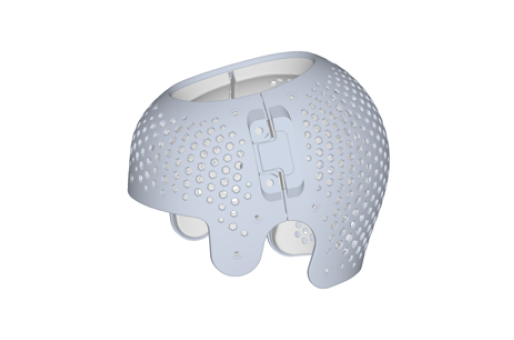
- Final Assembly: Full assembly connecting inner and outer shells into the finished product.
- Expansion Clips: Built-in extension mechanisms to expand space for continuous head growth.
Advantages Of FDM 3D Printing
- Low production costs
- Wide range of available colors and materials
- High-quality fabrication using 3D printing technology
Material - PP Filament (Polypropylene)
-

Lightweight
An ultra-lightweight material ideal for manufacturing orthotic devices
(Density: less than 0.9 g/cm³) -

Flexibility
A soft material with water resistance and stability
-

Safety
Medical-grade PP that is biocompatible and recyclable
-

Durability
Strong structural integrity resistant to daily wear and impact
AceBand Solution Deployment
AceBand partners are collaborative growth partners supporting
the global expansion of the AceBand business.
-
Software Licensing and Manufacturing Technology Transfer
Support local production environments through ACEBAND3D software licensing and transfer of 3D-printing manufacturing expertise.
-
Compatible with General-Purpose 3D Scanners
The solution is designed to work with a wide range of general-purpose 3D scanning systems.